
Image
A graphic for this article.

Investigating the Impact of Demographic Trends on Disease Prognosis in Myasthenia Gravis

March 26, 2026

Half a century of change: demographic trends and their clinical impact in acetylcholine receptor antibody-positive myasthenia gravis

Myasthenia gravis (MG) is a neuromuscular disorder caused by an autoimmune response which compromises nerve muscle communication, causing disabling weakness. In the past 50 years, the epidemiology of MG—how often it occurs in different groups of people and why—has changed over time. However, not much is known about how these changes have impacted management of MG.

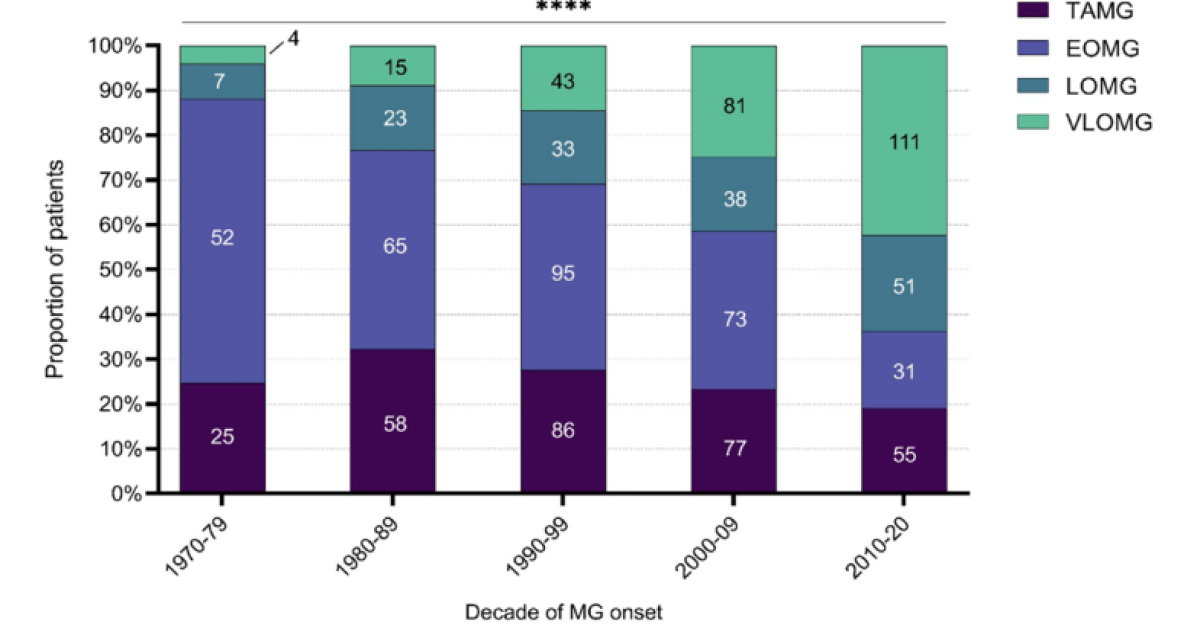
In this study, researchers investigated how demographic trends have affected disease prognosis in MG. The team assessed demographics, MG subtypes, and antibody status over 50 years in 1,023 patients with AChR-MG. In 517 patients, the team also evaluated treatment response and adverse events over 20 years.

Results show an increased rate of patients diagnosed with very late-onset MG. Authors note that patients with very late-onset MG may face an increased risk of long-term treatment exposure and adverse events, especially in elderly patients.

Read more about the study in the Journal of Neurology.

FacebookTwitter ShareLinkedIn ShareEmail Share